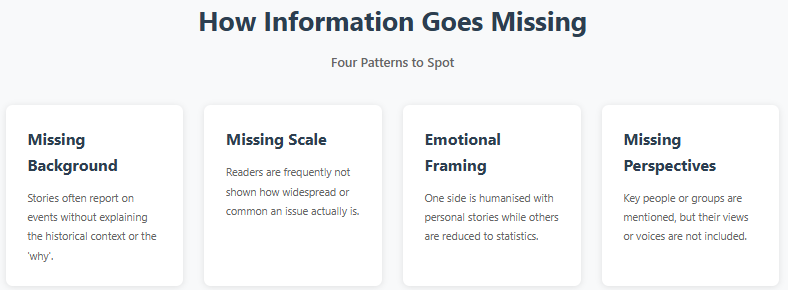
5 Ways to Check If an Article Is Credible Before You Share It
Before you share or act on a news article, five practical checks can tell you whether it is worth trusting. No special tools required.
Read more →Articles about AI in journalism, critical thinking, and media analysis.
Before you share or act on a news article, five practical checks can tell you whether it is worth trusting. No special tools required.
Read more →
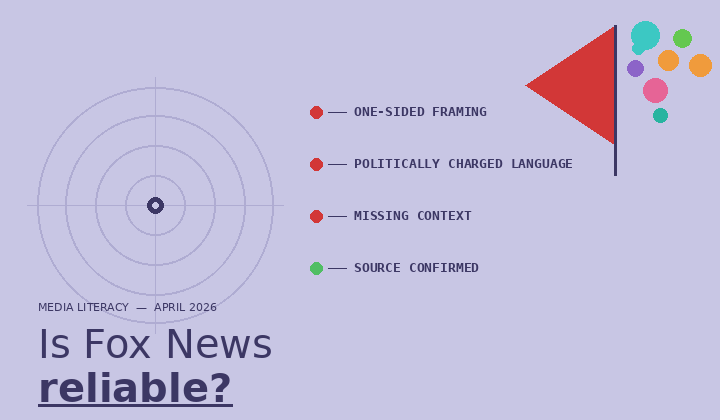
Fox News is one of the most-watched news networks in the world. It is also one of the most debated. Rather than asking whether you can trust the brand, it makes more sense to look at the articles themselves.
Read more →
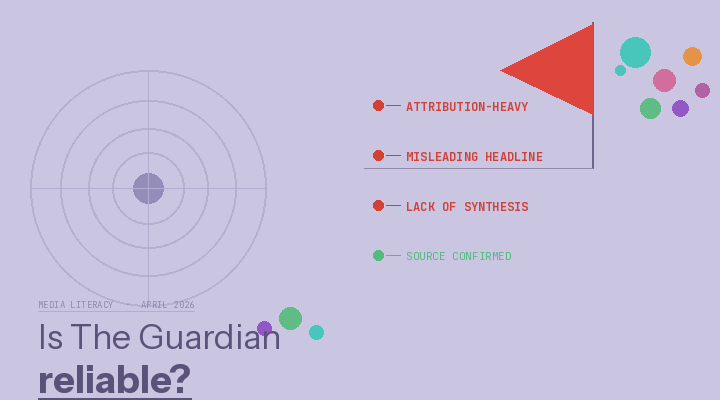
The Guardian is one of the most-read newspapers in the world. It has won Pulitzer Prizes and broken stories on mass surveillance. It is also one of the most contested outlets in English-language media. Rather than asking whether you can trust the brand, it makes more sense to look at the articles themselves.
Read more →
CNN is one of the most-watched news networks in the world. It is also one of the most debated. Rather than asking whether you can trust the brand, it makes more sense to look at the articles themselves.
Read more →
Trump is an extreme stress test for fact-checking as a discipline. Understanding why reveals something important about how to read any politically charged news.
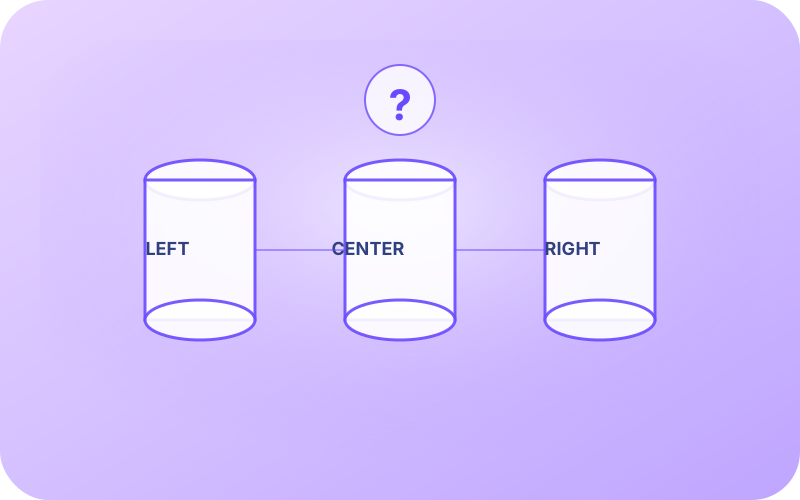
Read more →Media bias databases promise clarity. They turn a chaotic media landscape into something readable by reducing complex reporting to simple labels like left, right, or center. That promise feels reassuring, especially in an environment where news is constant and attention is limited. It is also incomplete.
Read more →AI often appears confident. It speaks with authority. In news analysis, this confidence can mislead.
Read more →Objectivity sounds reassuring. It suggests neutrality. It promises balance. In practice, it rarely exists.
Read more →Most AI tools are good at speed. They summarise fast. They sound confident. They often miss what matters.
Read more →